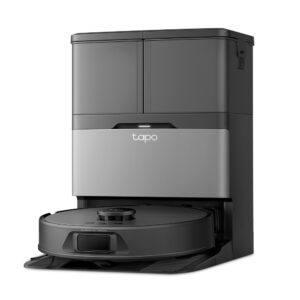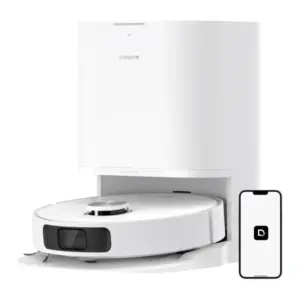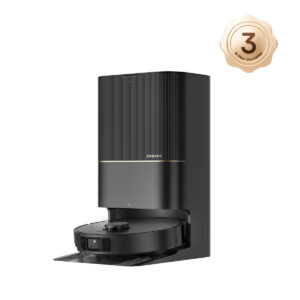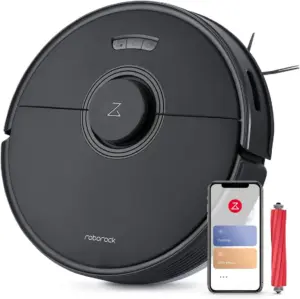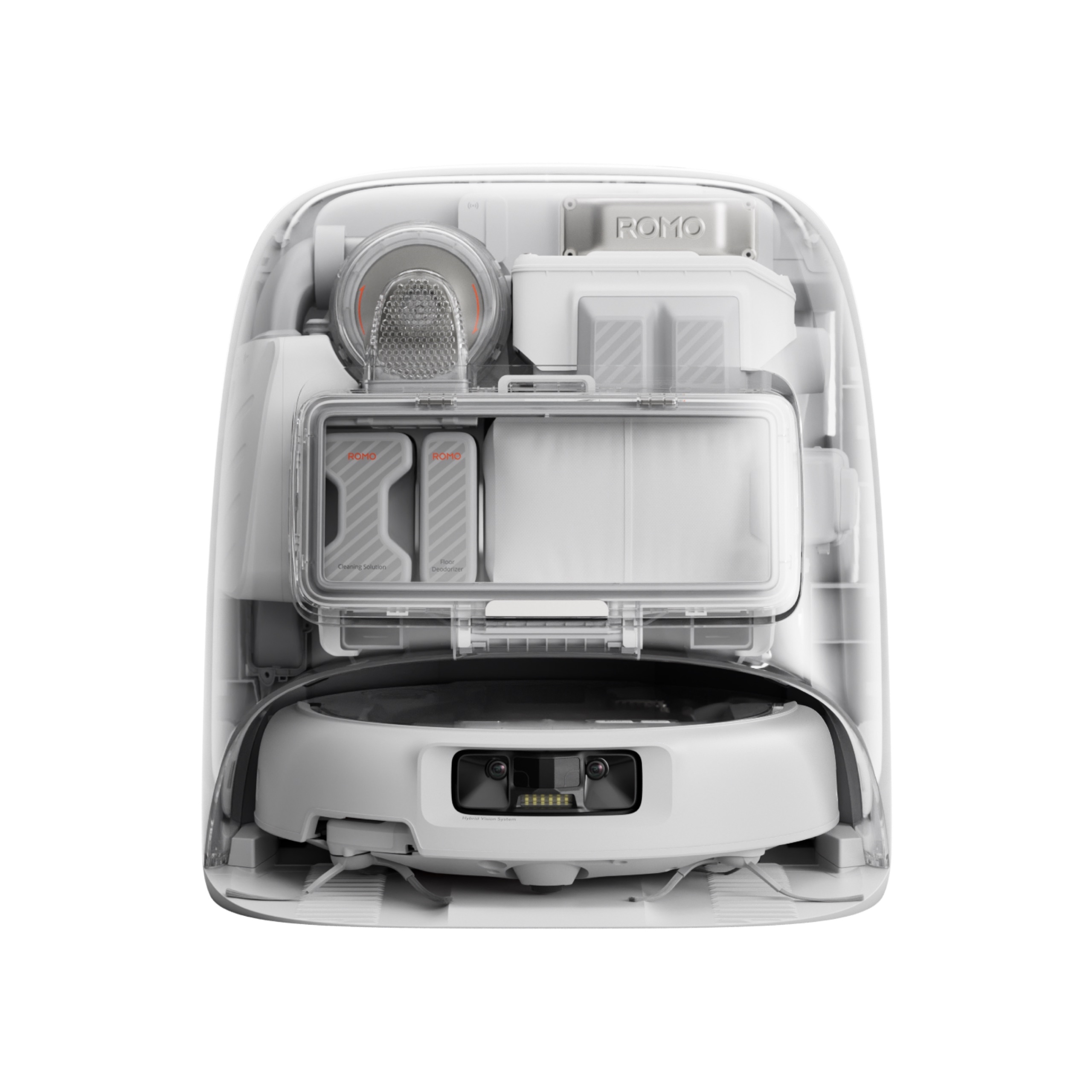
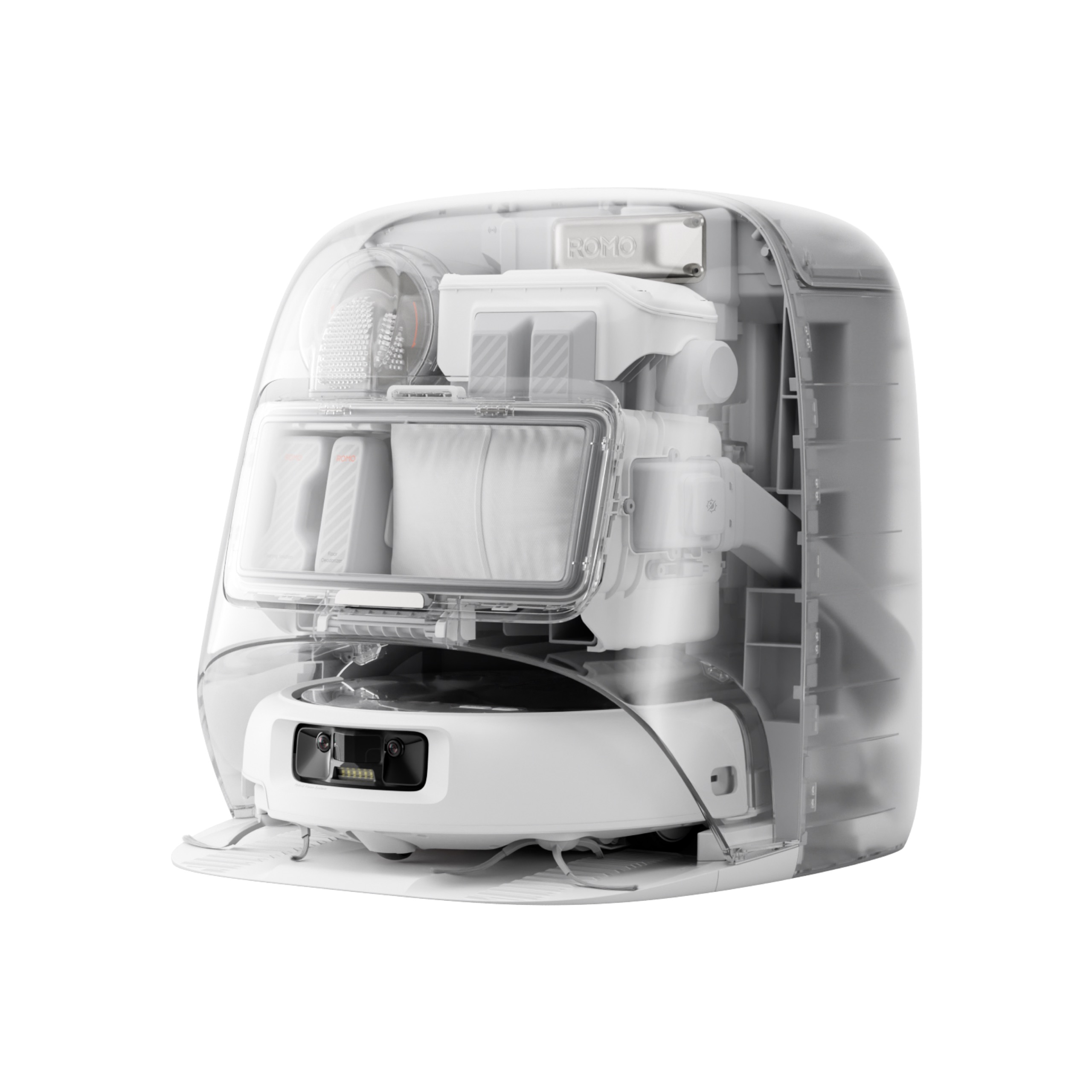
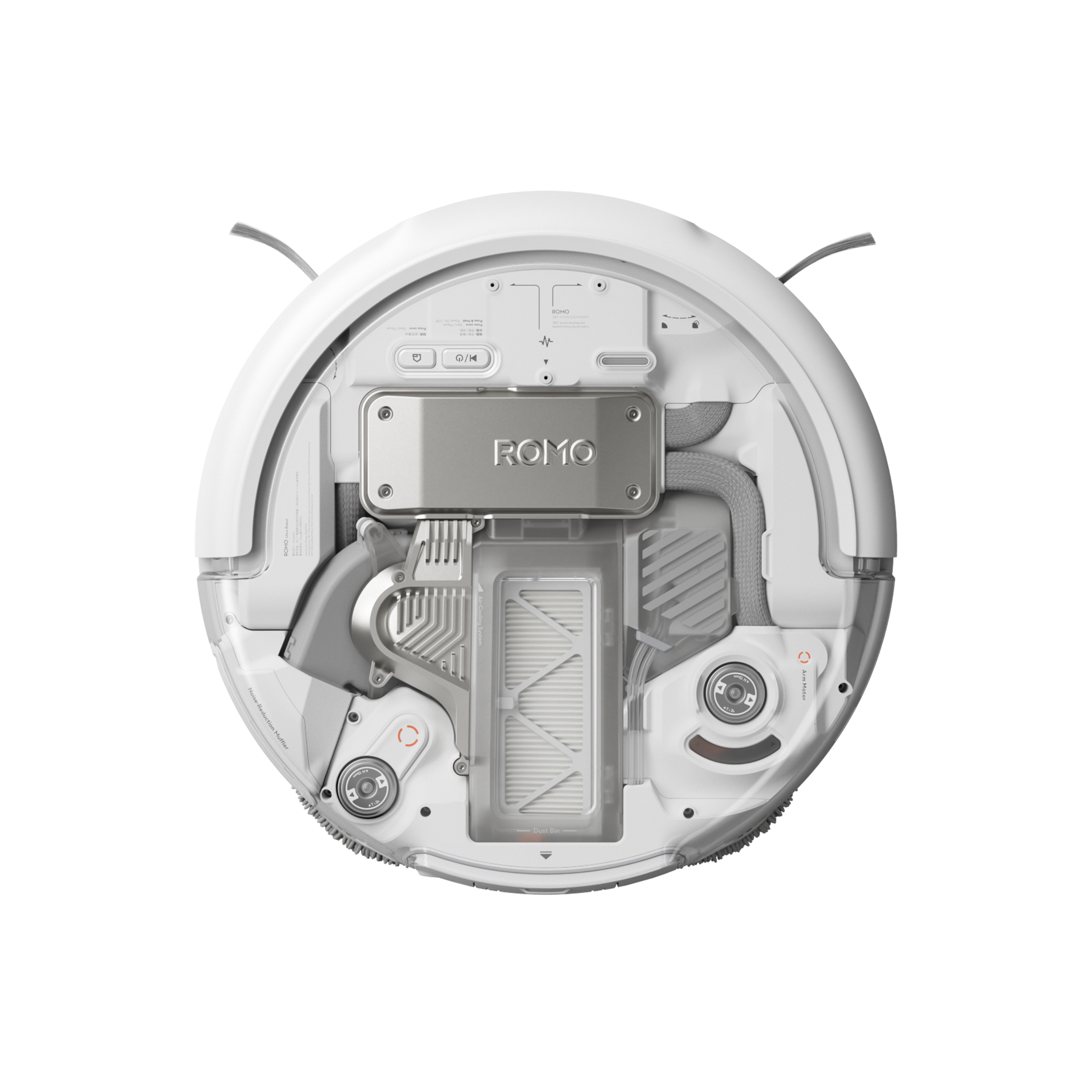
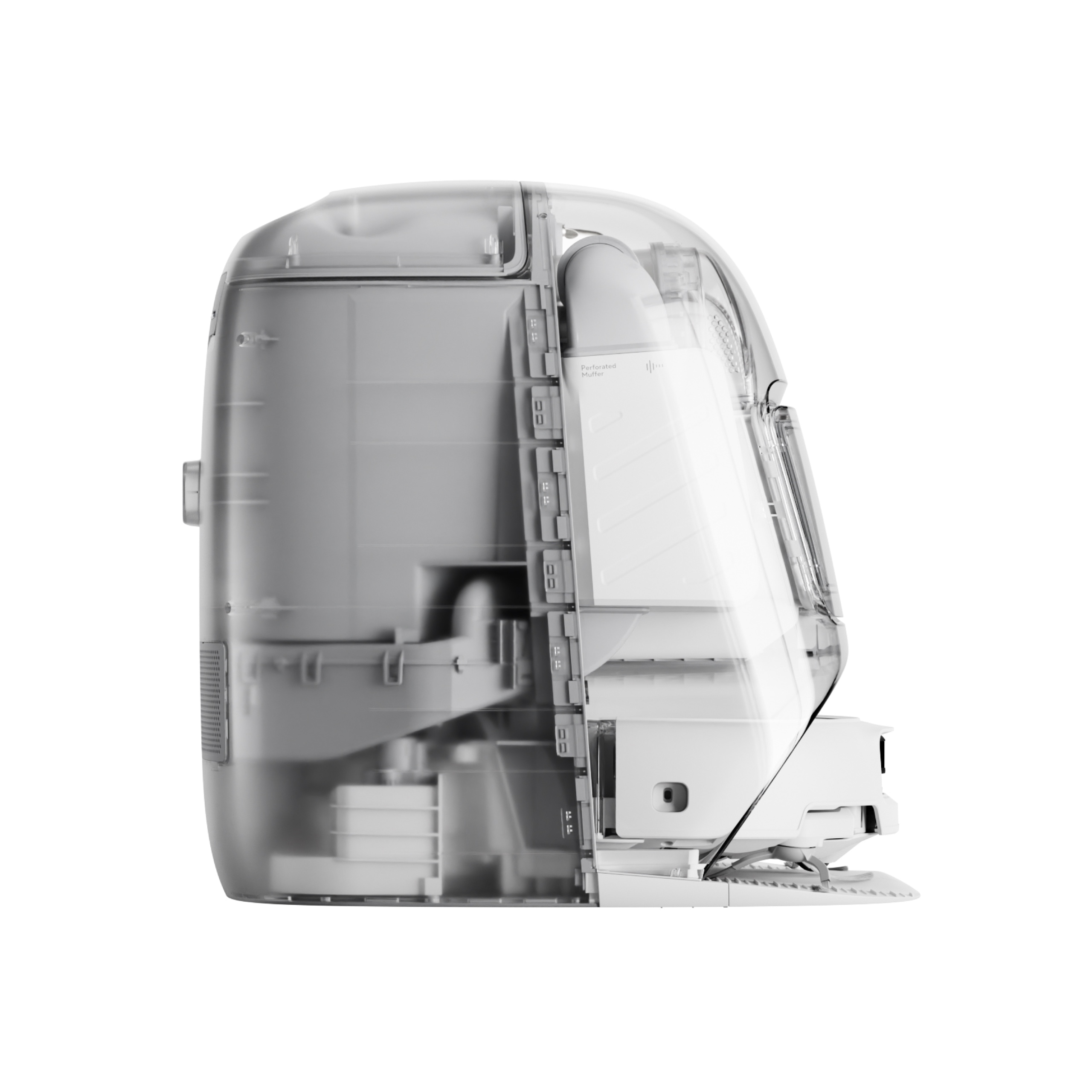
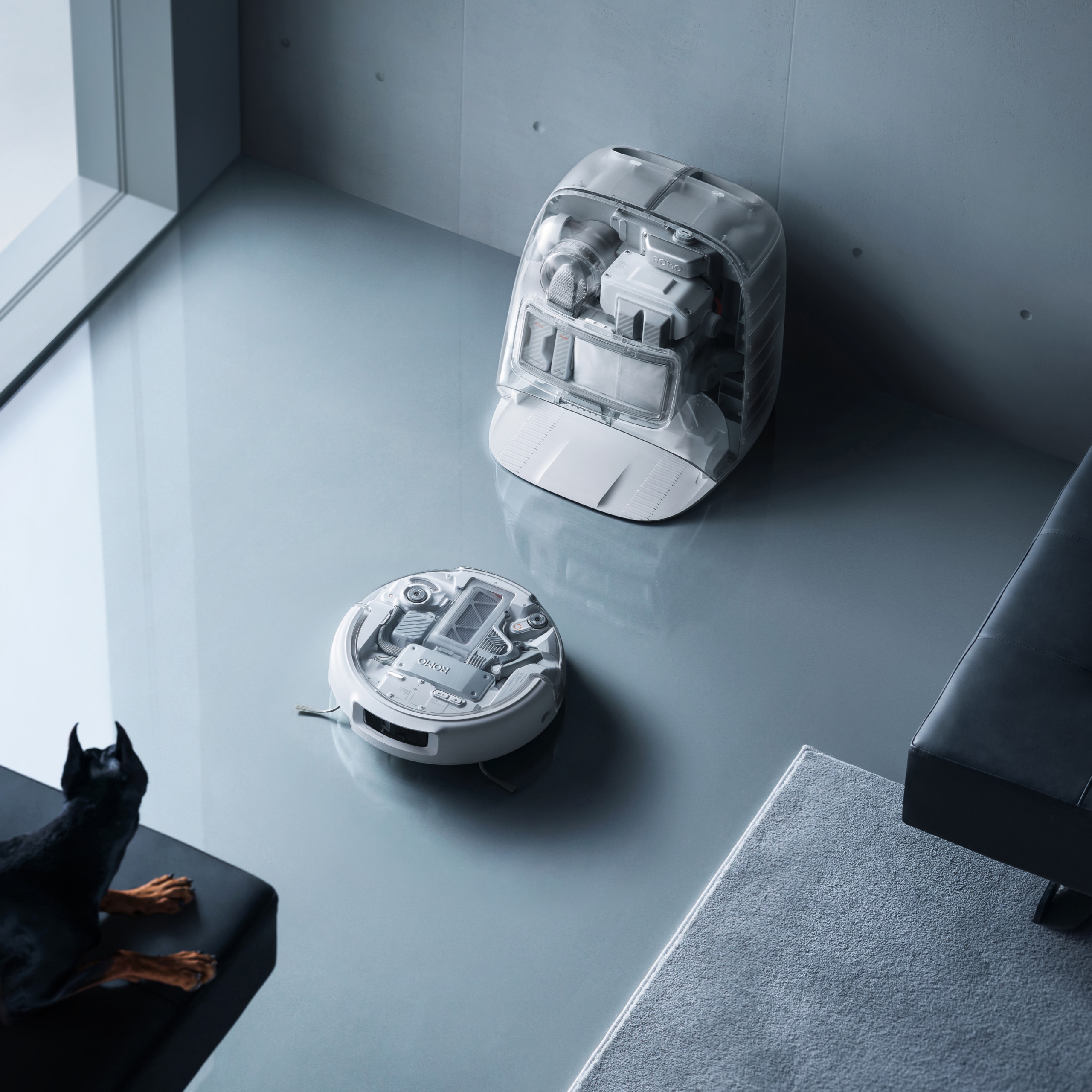
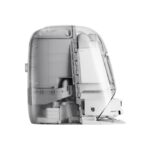

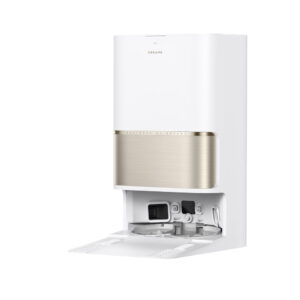
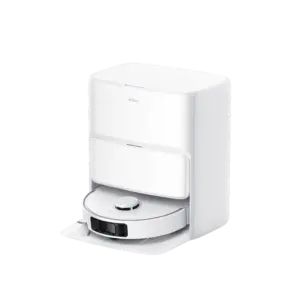
The DJI ROMO P is a robot vacuum and mop whose robot cover and base station are transparent, showing the internal structure. It finds its way with binocular fisheye vision sensors and wide-angle solid-state LiDAR, technology carried over from the brand’s drones, which lets it detect very thin objects such as cables and clean close along obstacles. Suction reaches up to 25,000 Pa, two roller brushes are designed to pick up long hair, and two extendable arms reach into edges and corners. The mop pads lift on carpets and can dispense cleaning solution or floor deodoriser from an extra compartment. The base station, in its water tank version, washes the mops with high-pressure jets, collects dust in a bag and dries the robot’s dust box. It offers four cleaning modes and is controlled through the DJI Home app.
When choosing a robot vacuum, compare the navigation and mapping system, the suction power, the battery runtime against the size of the home, the type of brushes (rubber brushes tangle less with hair) and, if it mops, how the mop is wetted and cleaned. The charging dock needs a socket and free space at the sides and in front; self-emptying docks use bags or bins that need emptying or replacing, and mop-washing docks have clean and dirty water tanks that are refilled and emptied by hand.
The data shown comes from the documentation published by the manufacturer; in case of divergence the official datasheet prevails. The product is covered by the three-year legal guarantee of conformity (Spanish RDL 1/2007).